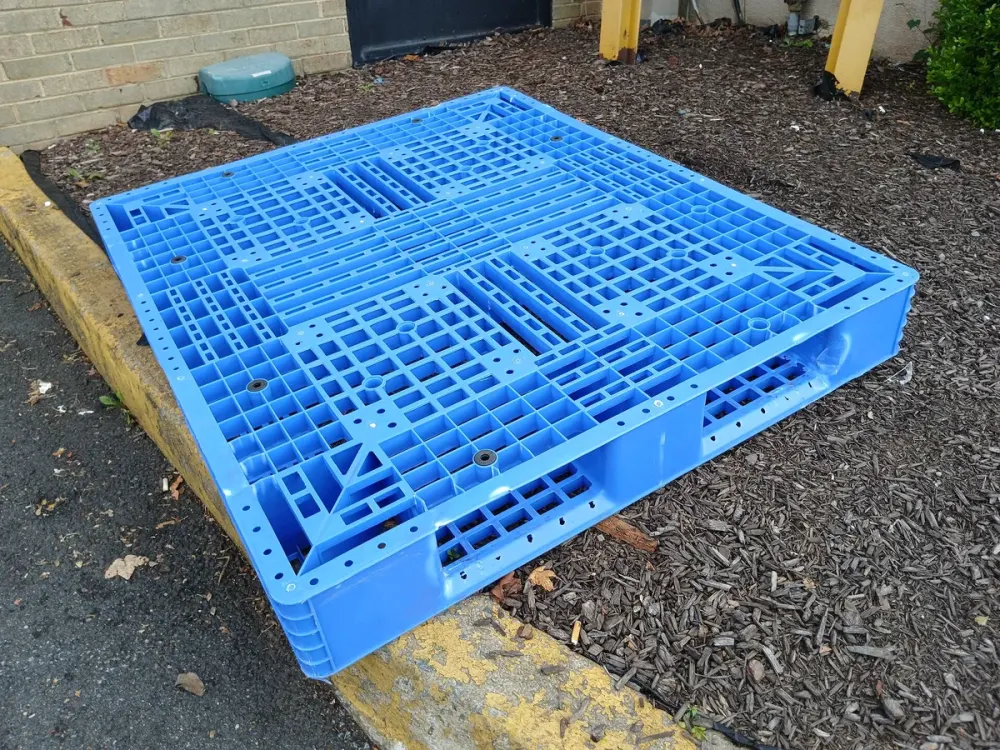
Public waste bins are usually sold in 60L, 120L, 240L, 660L and 1000L capacities. Outer dimensions of each size differ by tens of millimetres between manufacturers, so always check the exact model data sheet before ordering. This guide summarises common size ranges, how to choose a capacity for each location, and what to measure before a bulk order.
Quick reference: bin dimensions by capacity
| Capacity | L x W x H (mm) | Empty weight | Wheels | Typical location |
|---|---|---|---|---|
| 60L | 420-480 x 420-470 x 630-660 | about 2.5 kg | Usually none | Sidewalks, offices, school yards |
| 120L | 480-580 x 380-470 x 930-946 | about 7.9 kg | 2 wheels | Narrow lanes, schools, offices |
| 240L | 730-740 x 570-600 x 1010-1080 | about 11 kg | 2 wheels | Apartments, restaurants, parks |
| 660L | 1340-1370 x 770-830 x 1110-1260 | about 40-45 kg | 4 wheels, lockable | Collection points, factories, hospitals |
| 1000L | 1340-1430 x 980-1060 x 1120-1370 | depends on material | 4 wheels | Industrial zones, urban collection yards |
Dimensions are reference ranges and vary by a few tens of millimetres depending on manufacturer and material (HDPE or composite). Reference load capacity is 48 kg for the 120L bin and 96 kg for the 240L bin.
Estimated floor area of each capacity
| 60L |
0,18 m²
|
| 120L |
0,26 m²
|
| 240L |
0,44 m²
|
| 660L |
1,04 m²
|
| 1000L |
1,40 m²
|
Estimated from length x width at the middle of each range in the table. A 1000L bin takes over 7 times the floor area of a 60L bin.
Choosing a capacity by location
| Location | Suggested capacity | Reason |
|---|---|---|
| Offices, small shops | 60L - 120L | Low waste volume, compact to keep aisles clear |
| Sidewalks, streets | 60L - 120L | Several small points are easier to collect than one large bin |
| Schools, agencies | 120L - 240L | Waste peaks at break times, needs lid and wheels |
| Restaurants | 120L - 240L | Wet waste, needs a sealed lid and daily emptying |
| Apartments, residential areas | 240L - 660L | Shared collection point, volume depends on households |
| Factories, hospitals, industrial zones | 660L - 1000L | Large volume, collected by dedicated trucks |
This is a starting suggestion. Actual waste volume and collection frequency should decide the final choice.
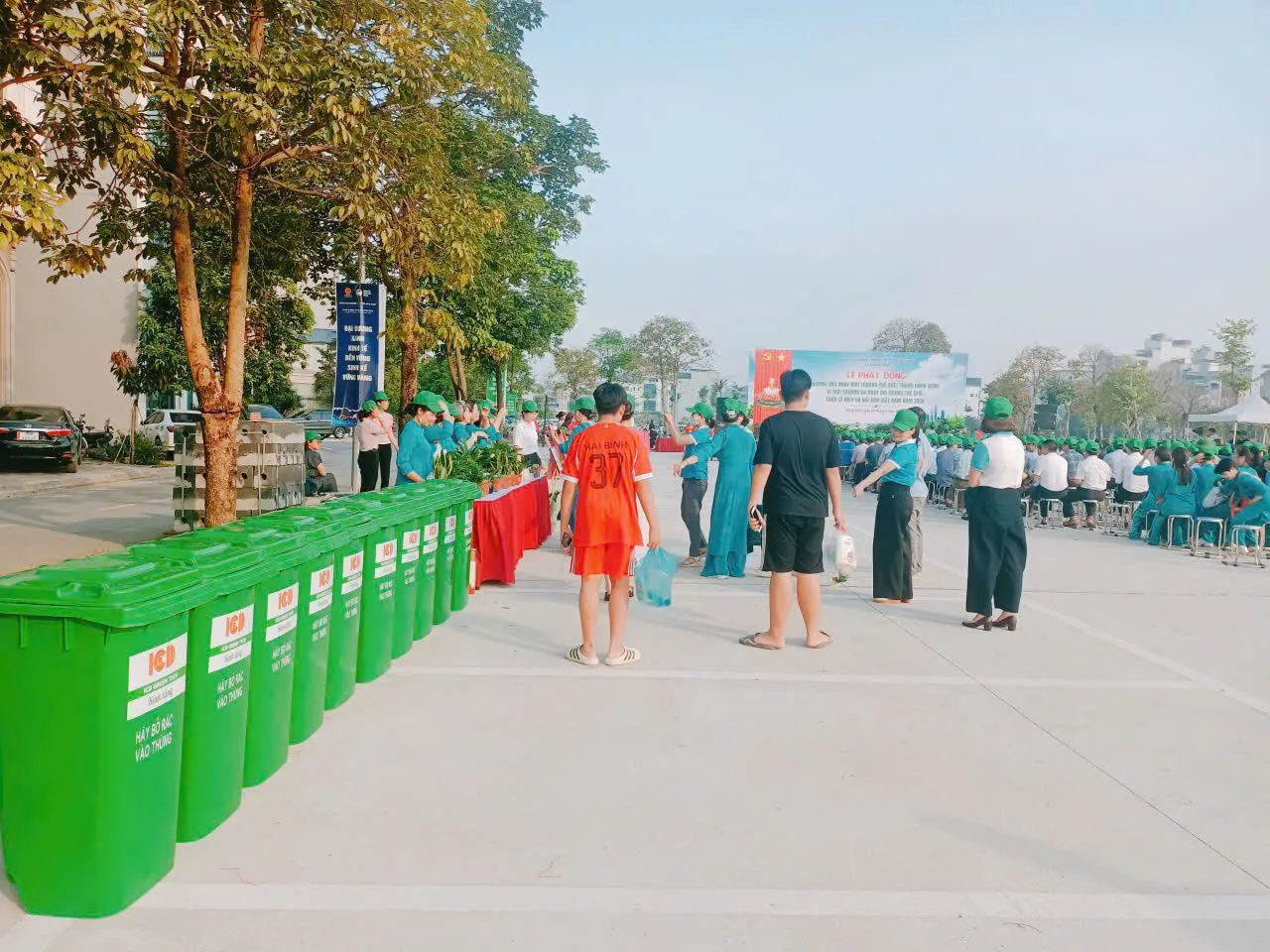
How to calculate the capacity you need
Instead of choosing by habit, estimate with this formula: required capacity = daily waste (litres) x days between collections x 1.2. The 1.2 factor is a buffer so bins do not overflow on busy days.
| Step | Illustrative example (assumed) |
|---|---|
| 1. Estimate daily waste | 600 litres per day at one collection point |
| 2. Set the collection frequency | Daily, meaning 1 day between collections |
| 3. Apply the formula | 600 x 1 x 1.2 = 720 litres |
| 4. Choose bins | 2 bins of 660L (1320 litres) or 3 bins of 240L (720 litres) |
The 600 litre figure is for illustration only. For a real site, measure actual waste over 5 to 7 days and use the highest day as the basis.
Four checks before a bulk order
- Space and access: measure doors, lifts, corridors and the turning radius of wheeled bins. A 660L bin is over 1.3 m wide, so many narrow routes cannot take it.
- Truck compatibility: 660L and 1000L bins usually follow the EN 840 standard for size and lifting mechanism. Ask the collection operator which lifting type they use before choosing a model.
- Material: HDPE is light and easy to clean, suited to residential areas. Composite handles heat and impact better, suited to factories and industrial zones.
- Accessories: lid, wheel locks, base drain plug and colours that follow local sorting rules.
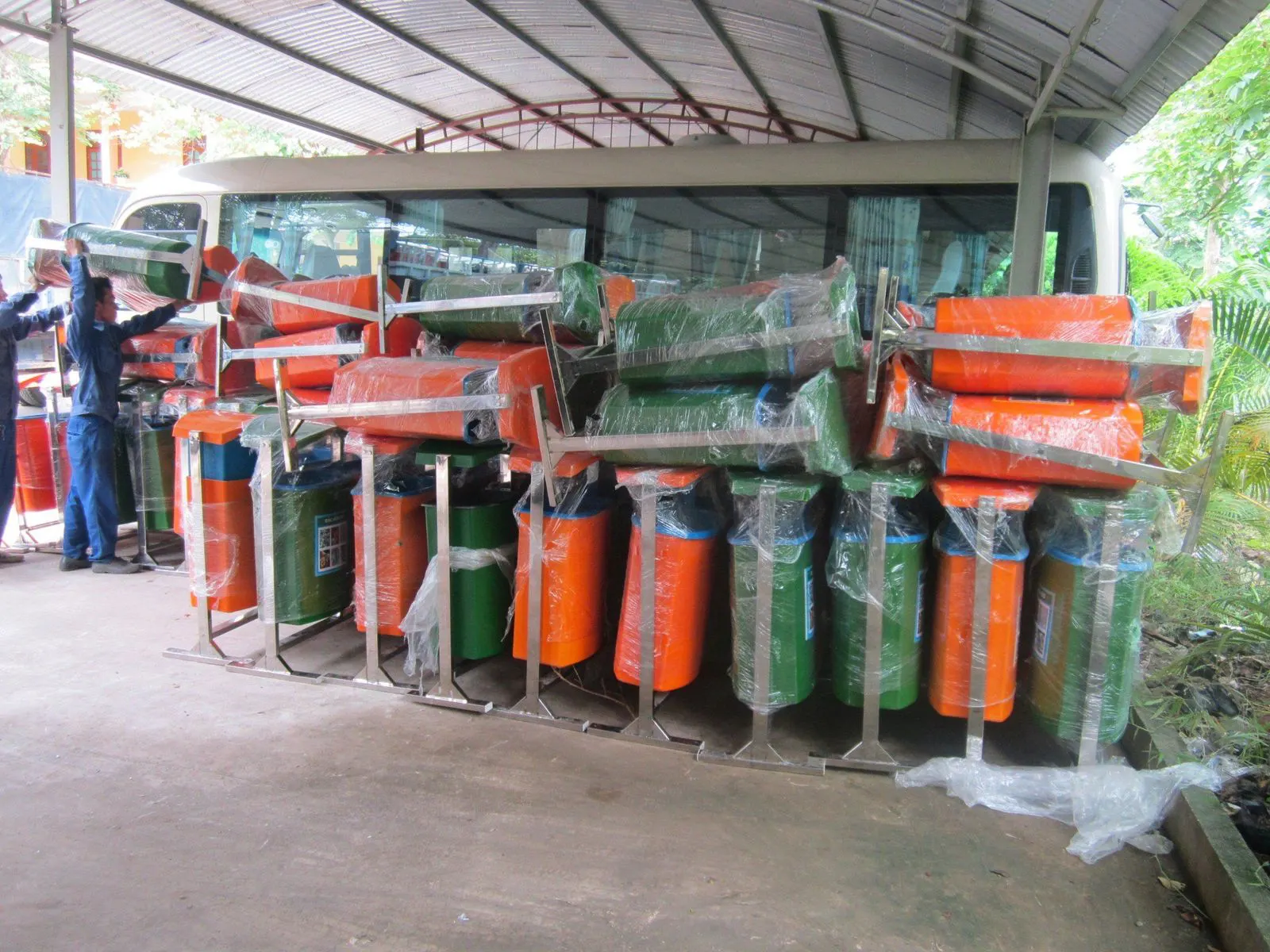
ICD advises on and supplies public waste bins
ICD has supplied bins to Vinhomes Ocean Park and handed over bins to a source-separation project in Lao Cai. To get advice on capacity and quantity, send ICD the number of collection points, estimated waste volume and collection frequency through the Contact page or call +84 24 2200 9188.