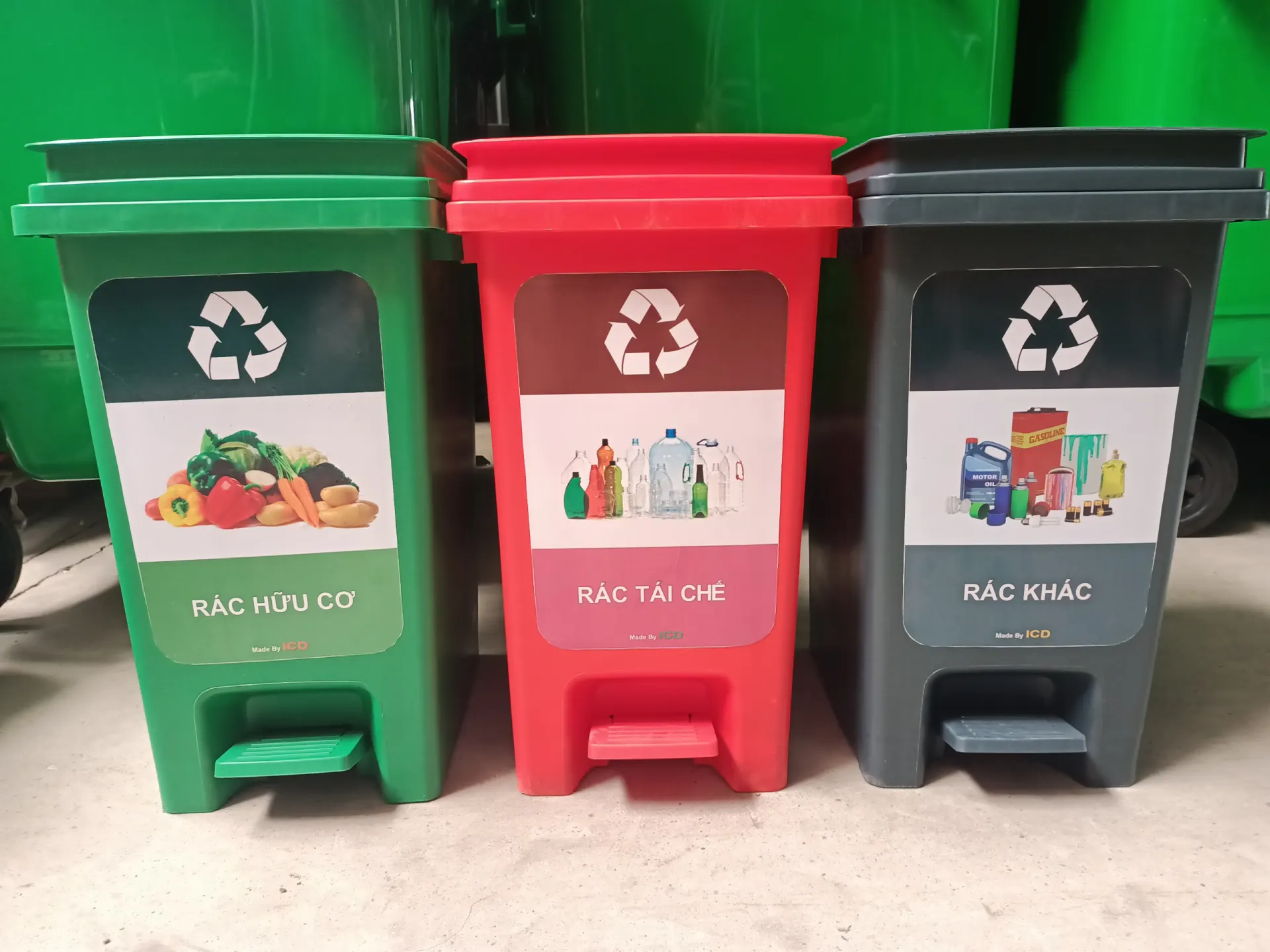
Knowing how to sort waste is essential for every household. It helps keep environmental pollution to a minimum. Waste that is not sorted correctly costs sanitation companies more time to process. This article gives you the simplest and most effective ways to sort waste today.
Household waste sorting habits in Vietnam
Waste sorting has not yet received enough attention in Vietnamese households. Many people assume that sorting waste is the job of the waste management company. But with the huge volume of waste collected every day, sorting at the treatment stage becomes even harder. Waste treatment is an objective and necessary issue in all living, production and business activities.
The Vietnamese dictionary defines awareness as “a correct understanding, expressed through the attitudes and actions that are needed”. As for waste sorting, concern about waste has largely stopped at the idea of throwing away whatever cannot be used. Public awareness is clearly the deciding factor in sorting waste. Recent changes show positive signs of a future with less pollution: less pressure on landfill space, higher recycling rates, and savings in energy and resources, which promote a circular economy and sustainable green living.
Building a waste sorting mindset also means turning awareness into action and into a shared belief in the community. It is about shaping a common trait in the thinking and behavior of Vietnamese people, who share the same natural and social conditions. Each household should get bins for sorting waste, and localities should collect and sort waste so that treatment is fast and effective.
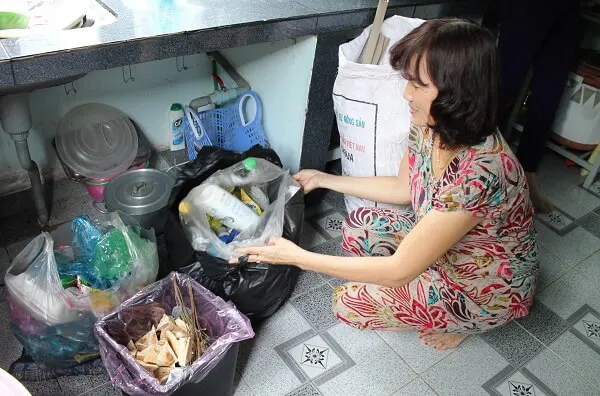
Purpose of sorting waste at the source
Human awareness decides whether waste is put in the right place and sorted. Many people put all kinds of waste into one bag or bin, without realizing that everyday household waste includes items that can be recycled and put to use.
Sorting household waste at the source is therefore essential. It not only reduces the load of solid waste going to landfills but also brings large economic benefits from recyclable and reusable waste.
More specifically, the purposes of sorting waste at the source are:
- Biết cách phân loại rác thải tại nguồn góp phần tiết kiệm được tài nguyên.
- Mang lại lợi ích cho chính chủ nguồn thải từ việc tận dụng phế liệu tái chế và phân compost tự chế biến.
- Góp phần giảm thiểu ô nhiễm.
- Góp phần nâng cao nhận thức cộng đồng về bảo vệ và sử dụng hợp lý tài nguyên và môi trường.
- Phân loại rác sinh hoạt hay phân loại rác thải nhựa góp phần giảm thiểu tổng lượng rác thải trong cộng đồng thải ra môi trường nhằm giảm tải cho môi trường, tiết kiệm chi phí thu gom, vận chuyển, xử lý.
Types of waste today
Sorting household waste plays an important role in protecting the environment. Based on the characteristics and decomposability of each type, waste is divided into groups so that suitable treatment methods can be applied.
Inorganic waste
- Chất thải rắn khó phân hủy là những thành phần rác vô cơ và chất rắn trơ (túi nilon, cành cây, bùn đất, hộp xốp…). Chất thải này sẽ đưa về khu xử lý đốt hoặc chôn lấp;
- Nguồn gốc rác vô cơ là các loại vật liệu xây dựng không thể sử dụng được, các loại bao bì, vỏ hộp không thể tái chế, các loại túi ni lông thường được bỏ đi sau quá trình sử dụng. Phân loại rác thải nhựa như: đựng hộp sữa, thực phẩm, những vật dụng, thiết bị trong nhà.
Organic waste
Easily decomposable solid waste is organic waste that comes from cooking, leftover food and daily human activities (tea leaves, coffee grounds, leaves, rotting wood). It is used to make microbial fertilizer, organic fertilizer and animal feed. Organic waste is the opposite of inorganic waste in that it breaks down easily.
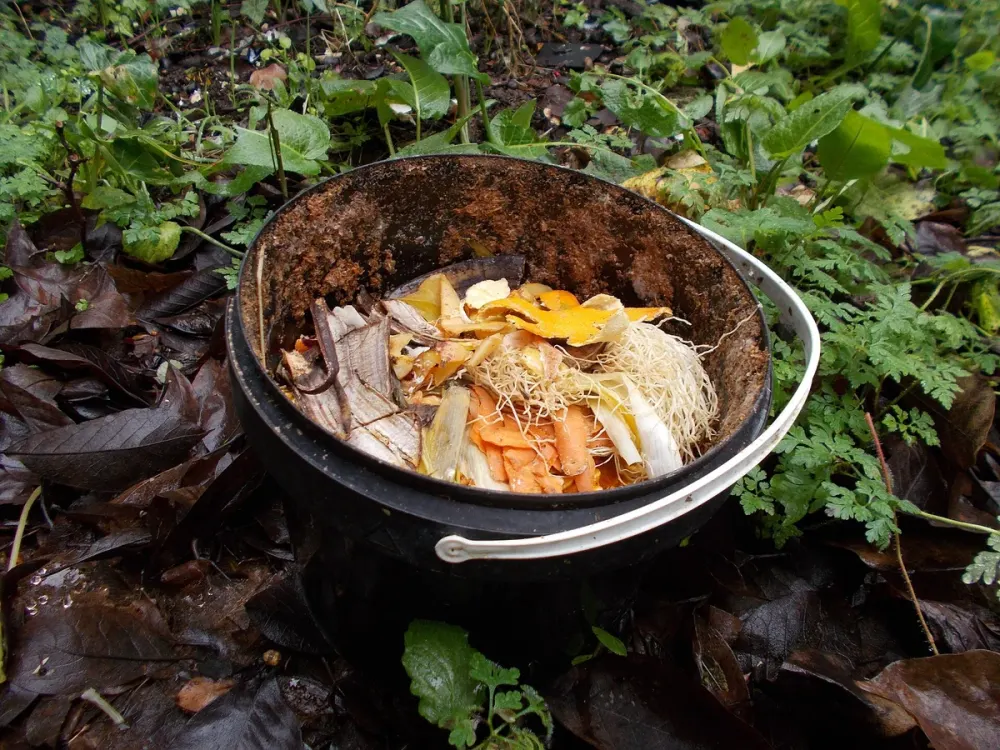
For organic solid waste, households with garden space can turn easily decomposable waste into microbial fertilizer at home using a portable waste pit. This is a small pit where people dump organic waste each day and cover it with a lid; after a while the waste rots into material that is excellent for feeding plants or improving soil.
Recyclable waste
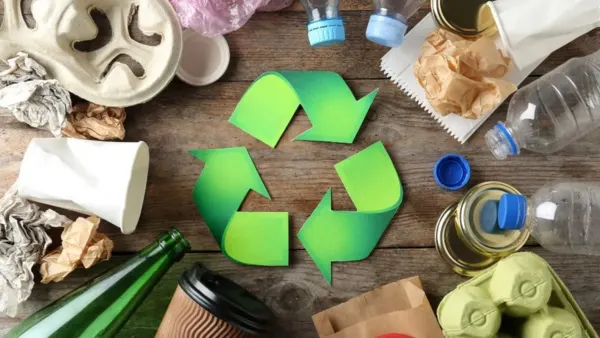
Recyclable waste is hard to decompose but can be processed into usable products. It is usually inorganic material such as waste paper, bottles, jars, food cans and metals.
Hazardous waste
Hazardous waste contains toxic, flammable, explosive, corrosive, radioactive or infectious elements that can seriously affect health and the environment. Under the 2020 Law on Environmental Protection, individuals and organizations that generate hazardous waste must declare it fully, sort it separately, store it safely and never mix it with ordinary waste. They are also responsible for treating it or handing it over to a licensed unit as regulated.
Latest guide to sorting household waste
Sorting household waste is important work that everyone should do to keep the living environment green, clean and beautiful. The guide below will help you sort quickly and decide how to handle each type:
Prepare sorting tools
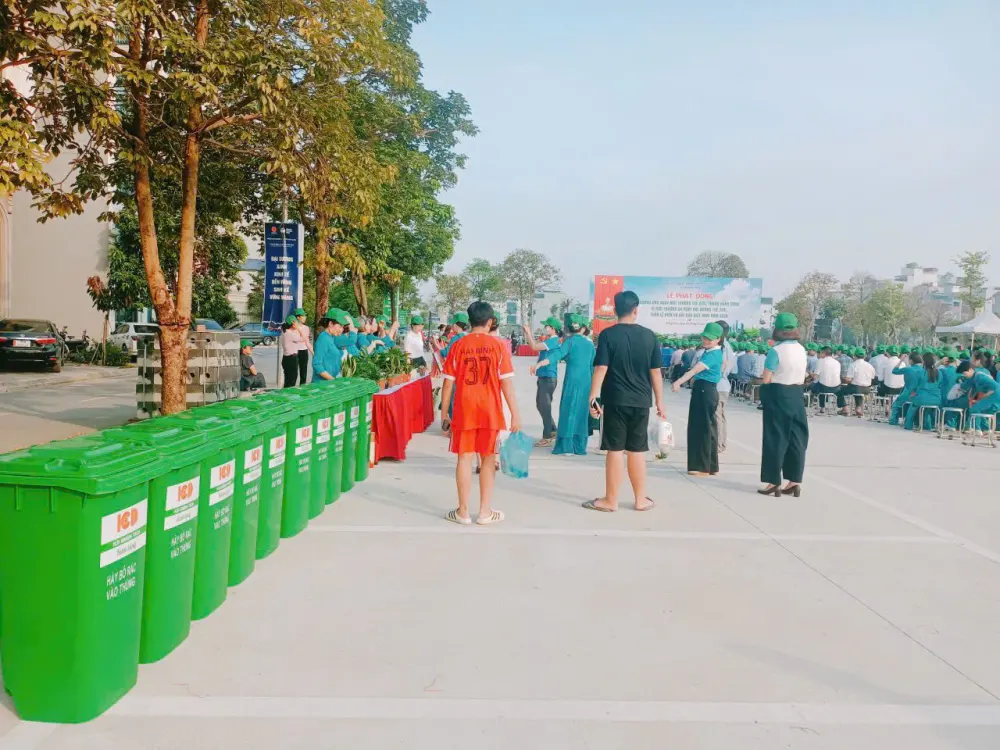
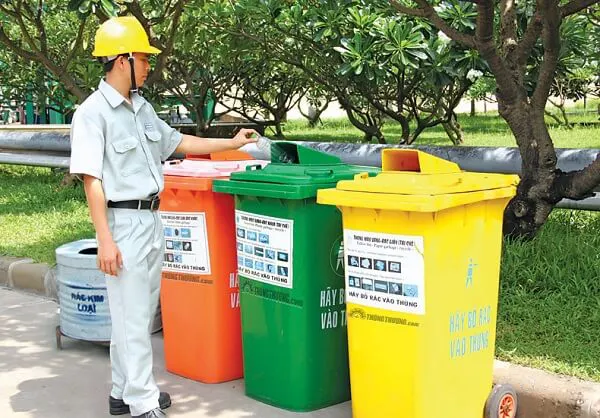
For effective sorting, use bins with several compartments or clearly distinct colors for each type of waste. Each bin or compartment should carry a specific label with illustrations, such as organic waste, inorganic waste, recyclable waste or hazardous waste. If you use separate bags, write the waste type on the outside to avoid confusion during collection and treatment.
You should also prepare tongs, gloves and a face mask to limit direct contact with bacteria and stay safe while sorting.
Sorting steps
Organic waste includes leftover food, leaves and coffee grounds, which break down easily and can be used as fertilizer. Inorganic waste is hard to decompose, such as plastic bags, foam boxes and building materials, and is usually incinerated or buried. Recyclable waste includes plastic bottles, cans, paper and metal, which can be reused to reduce the waste released into the environment.
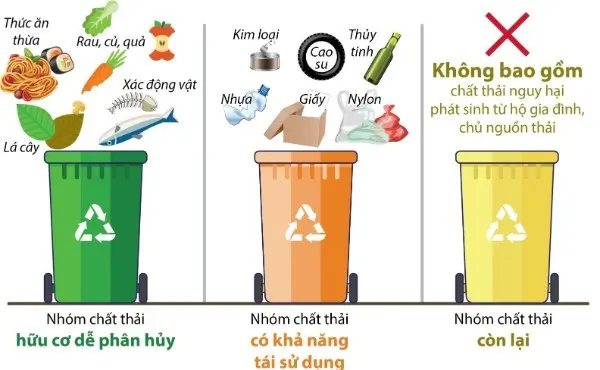
Once you have identified the type of waste, put it into the matching compartment or bin: green for organic waste, orange for inorganic waste, white for recyclable waste and black for hazardous waste. Note that bin colors may vary by area.
Handling hazardous waste
Treatment methods are chosen to keep people safe and minimize negative effects on the environment. The most common methods for hazardous waste today are:
- Biological method: uses microorganisms to break down organic matter in contaminated soil and sludge.
- Incineration: burns waste in a furnace, treats the exhaust gas and buries the remaining slag.
- Landfilling: applies to ash, slag and sludge; the landfill has a waterproof lining and collects leachate for treatment.
- Recycling: a method for treating hazardous waste such as electronics, plastic, paper and glass.
Storage notes
From the moment of reception, waste and scrap must be separated into specific groups such as household waste, industrial waste, medical waste, metal scrap and plastic. Sorting by type not only keeps things safe and prevents uncontrolled chemical reactions but also makes later treatment and recycling easier.
Waste treatment methods
Based on the composition and characteristics of each type of waste, the main treatment methods are as follows:
Sanitary landfill
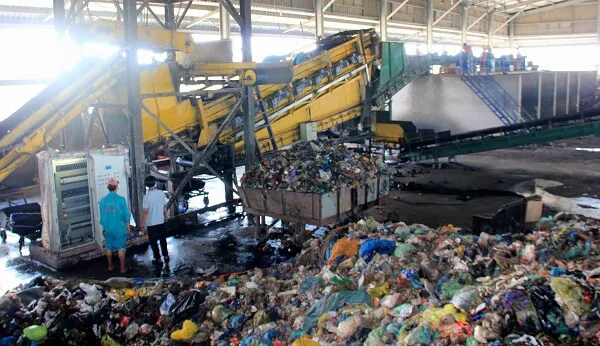
This is a simple method and is widely used in Vietnam today. Waste is buried in layers and compacted to reduce volume, and each layer is covered with an intermediate layer of soil to limit smell and insects.
A landfill cell is half sunken and half raised. Solid waste is spread in a thin layer over the cell and compacted to the smallest practical volume. It is covered at the end of each working day, or after each 2 m layer of waste, with a 0.2 m layer of natural soil.
The advantages of this method are low treatment cost and no need for high technology, which suits places that lack the conditions for more advanced options, as in Vietnam.
Incineration
This method is popular in many countries, such as Japan, Germany, Switzerland, the Netherlands and Denmark, for treating solid waste in general, and especially toxic industrial waste and hazardous medical waste.
Incineration is important because it reduces the waste that must go to final treatment by landfilling ash and slag. The energy released can also be used in boilers, heating systems and industries that need heat and power generation. Compared with many other advanced treatment methods, burning waste is much more economical, especially since collection and recycling take a lot of time and money.
Advantages: greatly reduces the volume of waste; the ash and slag are only 5 - 6% of the volume of waste burned.
Disadvantages: high investment and treatment costs, so it is only suitable for advanced countries.
Developed countries such as Singapore, Japan, the United States and Northern Europe use incineration technology for waste with very good results.
Composting
After sorting, the easily rotting organic waste collected each day begins the composting process. Drain organic waste before putting it in a bucket or bag, because water makes it rot quickly and smell bad.
The advantage is that compost has no rotten smell and does not pollute the environment. This model matters a great deal for the social environment and for public awareness. It is also important for the economy, especially as market prices rise, notably for fertilizer.
Benefits and impact of sorting waste correctly
Sorting waste at the source is a practical action to protect the living environment and brings many long-term benefits to society and individuals:
More recycling, saving resources
Sorting correctly allows recyclable materials such as paper, plastic and metal to be recovered effectively. These materials then go into new production instead of extracting more resources from nature. This both reduces landfill waste and helps conserve increasingly scarce resources.
Lower treatment costs and pollution
When waste is separated from the start, collection and treatment are more efficient, reducing the need for labor and sorting machinery later. The amount of waste that must be burned or buried also falls, which limits toxic emissions and saves the waste management budget.
Raising community awareness
When individuals sort and treat waste properly, the whole community gradually builds a civilized way of life, protecting the ecosystem together and improving quality of life for future generations.
Penalties for not sorting household waste
Treating and sorting waste is something every individual, household and organization should do. Failure to sort household waste is penalized under State regulations. Residents who do not sort waste may be refused collection in the future.
Clause 2, Article 78 of the draft revised Law on Environmental Protection sets out rules on the collection and transport of household solid waste, including:
- Đơn vị vận chuyển, thu gom chất thải rắn sinh hoạt có quyền từ chối thu gom, vận chuyển rác sinh hoạt của hộ gia đình, cá nhân nếu không phân loại và sử dụng bao bì đúng quy định.
- Đơn vị vận chuyển, thu gom rác thải thông báo cho cơ quan có thẩm quyền để kiểm tra, xử lý theo quy định pháp luật đến cá nhân, tổ chức vi phạm.
- Cá nhân, hộ gia đình phải có trách nhiệm chuyển chất thải rắn sinh hoạt đã được phân loại đến điểm tập kết theo quy định hoặc chuyển giao cho đơn vị thu gom, vận chuyển rác sinh hoạt.
This article has explained how to sort household waste in line with regulations. We hope it is useful to everyone.
Vietnam Industrial and Urban Development Joint Stock Company (ICD) distributes and supplies waste sorting bins for residential and public works. To buy products, please contact us for a quotation and detailed advice.